


What standards are used for structure steel?
May 21, 2025
Leave a message
What standards are used for structure steel? Well, as a structure steel supplier, I've dealt with this question more times than I can count. In this blog, I'll break down the key standards used in the world of structure steel and why they matter.
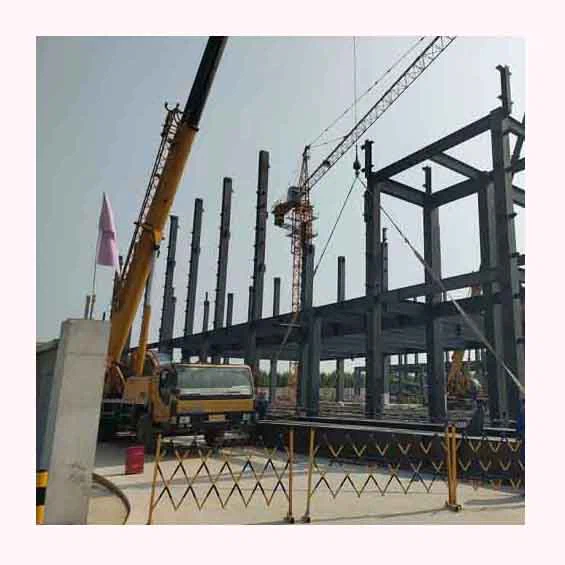
First off, let's talk about the American Institute of Steel Construction (AISC) standards. These are like the holy grail in the US for structural steel design and construction. The AISC provides detailed specifications on everything from the mechanical properties of different steel grades to the proper way to connect steel members. For instance, their standards define how much load a particular steel beam can handle, which is crucial when you're building a Factory Steel Structure. You wouldn't want to use a beam that's too weak and risk the whole structure collapsing, right?
Another big player is the European Committee for Standardization (CEN). Their standards, known as EN standards, are widely used across Europe. These standards cover a broad range of aspects, including the chemical composition of steel. Different chemical elements in steel can affect its strength, ductility, and corrosion resistance. For example, adding a bit of chromium can make the steel more resistant to rust, which is super important for Steel Structure Factory Building that might be exposed to the elements.
In Asia, the Japanese Industrial Standards (JIS) and the Chinese National Standards (GB) are commonly followed. JIS has a long - standing reputation for high - quality and precise specifications. They ensure that the steel used in various applications, like Steel Structure Of Workshop, meets strict quality control measures. The Chinese standards, on the other hand, have been evolving rapidly to keep up with the country's booming construction industry. They take into account both domestic and international best practices.
Now, why are these standards so important? Well, for starters, they ensure safety. When a building or a structure is designed and built according to recognized standards, it's much less likely to fail under normal use or even in extreme conditions like earthquakes or strong winds. Standards also promote consistency. If you're a contractor building multiple Factory Steel Structure projects, you know exactly what to expect from the steel you're using. This makes the construction process more efficient and predictable.
In addition to these major international and regional standards, there are also industry - specific standards. For example, the offshore oil and gas industry has its own set of standards for steel structures used in platforms. These standards are even more stringent because the structures have to withstand harsh marine environments, including saltwater corrosion, high waves, and strong currents.
Let's dig a bit deeper into the specific requirements of these standards. One of the most important aspects is the steel grade. Different grades of steel have different properties. For example, ASTM A36 is a common carbon steel grade in the US. It has a relatively low yield strength but is easy to work with, making it suitable for many general construction applications. On the other hand, high - strength low - alloy (HSLA) steels, like ASTM A572, have higher yield and tensile strengths, which are great for structures that need to support heavy loads, such as large Steel Structure Factory Building.
The standards also specify how the steel should be fabricated. Welding is a critical part of steel structure construction, and the standards define the welding procedures, the types of electrodes to use, and the quality control measures for welding. Improper welding can lead to weak joints, which can compromise the integrity of the entire structure.
Surface treatment is another area covered by the standards. As I mentioned earlier, corrosion can be a big problem for steel structures. Standards often require that steel be coated with protective layers, such as paint or galvanization. Galvanized steel has a zinc coating that acts as a sacrificial anode, protecting the underlying steel from rusting.
When it comes to inspections, the standards lay out a clear framework. Regular inspections are necessary to ensure that the steel structure meets the design requirements throughout its life cycle. Inspectors check for things like cracks, corrosion, and any signs of structural damage. They use non - destructive testing methods, such as ultrasonic testing and magnetic particle testing, to detect internal flaws in the steel.
As a structure steel supplier, I make sure that all the steel I provide meets the relevant standards. I work closely with my manufacturers to ensure that the steel is produced under strict quality control. I also provide my customers with detailed documentation about the steel, including its grade, mechanical properties, and compliance with the standards.
If you're in the market for structure steel for your Factory Steel Structure, Steel Structure Factory Building, or Steel Structure Of Workshop project, it's important to choose a supplier who understands these standards. I'm here to help you make the right choice. Whether you need advice on the best steel grade for your project or you want to know more about the standards, I've got you covered.
Don't hesitate to reach out if you're interested in purchasing structure steel. We can have a chat about your specific requirements, and I'll do my best to provide you with high - quality steel that meets all the necessary standards. Let's work together to build safe and reliable structures.
References

- American Institute of Steel Construction (AISC) - AISC Specification for Structural Steel Buildings
- European Committee for Standardization (CEN) - EN standards for steel construction
- Japanese Industrial Standards (JIS) - Relevant JIS standards for steel
- Chinese National Standards (GB) - GB standards for steel in construction
Send Inquiry